
Philia ADMR is the digital platform deployed by the ADMR network to coordinate home care interventions. For caregivers, it consolidates scheduling, messaging, and beneficiary tracking into a single tool. With approximately 2,000 coordinated interventions per week in 2023 and a 15% increase in one year, the digital workload has intensified. Understanding the practical functioning of this software on a daily basis has become an operational necessity, not a luxury.
Scheduling Errors in Philia ADMR: Recurring Friction Points
The most used feature by caregivers remains the consultation and updating of the schedule. It is also the one that generates the most problems on a daily basis. Field feedback points to three situations that cause cascading errors.
- The entry of absences not recorded in the correct format: a poorly entered absence in Philia can keep a scheduled intervention while the beneficiary is not at home, disrupting the entire following route.
- Last-minute changes not synchronized: when a change is made by the coordination without the caregiver refreshing their schedule on the app, they arrive at the wrong home or at the wrong time.
- The lack of systematic verification before leaving for the route: recent training emphasizes a morning check of the schedule in the tool, but this habit is not yet established everywhere.
These errors do not stem from a technical defect in the platform. They reflect a gap between the speed of updates on the coordination side and the moment when the caregiver actually checks their screen. Several departmental federations have started to integrate push alerts to reduce this gap, but feedback varies on their actual effectiveness depending on the quality of mobile connectivity in rural areas.
Those looking for a tutorial on how to use the Philia ADMR software will find step-by-step explanations on navigating the scheduling screens and managing special cases.

Secure Messaging and Traceability of Exchanges at Home
Since 2024, several departments have made digital coordination systems between caregivers and families mandatory. Philia ADMR integrates a messaging system that meets this requirement by ensuring traceability of exchanges related to interventions.
Specifically, the messaging allows for reporting an incident at home, transmitting information about a beneficiary’s health status, or confirming the completion of a task. Each message is time-stamped and linked to the beneficiary’s digital file. For the caregiver, this replaces paper liaison notebooks that were often lost or unreadable.
The gain in secure communication between the caregiver and coordination is tangible. However, the tool imposes a writing discipline: messages must remain factual, brief, and contain no sensitive health data outside the designated fields. This constraint, related to the confidentiality of personal data, is not always well understood by caregivers who are new to the platform.
Philia ADMR Training: What Works and What is Lacking
The deployment of Philia is accompanied by training sessions for caregivers. The content varies from one federation to another, but the most common modules cover navigation in the schedule, entering intervention reports, and using the messaging system.
The most effective training sessions are those that simulate real situations in a test environment. A caregiver who has handled a case of unexpected absence or a schedule change during training makes fewer mistakes in the field. Purely theoretical sessions, based on slides, produce few lasting results.
Identified Gaps by Teams
Two points frequently arise in feedback from trained caregivers.
The first concerns the management of personal data. The platform hosts sensitive information about beneficiaries (health status, lifestyle habits, family contacts). Training sessions spend little time on privacy rules applicable to digital data, even though caregivers handle this information daily on their professional phones.
The second point relates to post-training support. Once the session is over, the caregiver often finds themselves alone with the tool. Federations that have established a digital reference person reachable by phone observe a quicker adoption of Philia in daily use. Those that do not have such support frequently see a return to paper practices.
Beneficiary’s Digital File: What the Caregiver Must Check
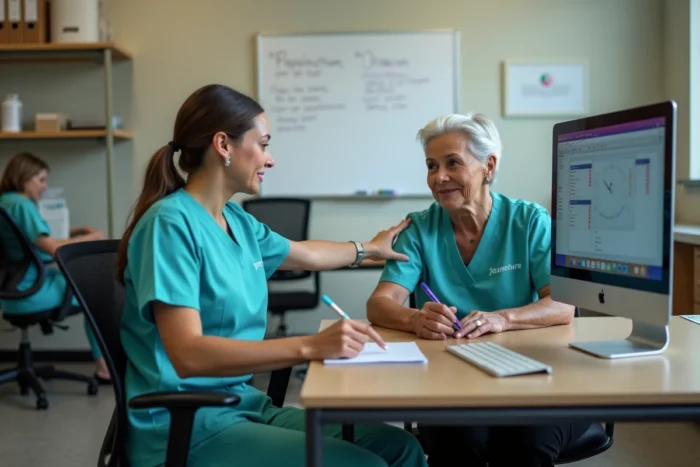
Each beneficiary has a digital file in Philia, accessible from the caregiver’s schedule. This file centralizes useful information for the intervention: contact details, specific instructions, history of previous visits.
The value of this file depends entirely on its update. A caregiver who arrives at a beneficiary’s home with instructions that are several weeks old works blindly. The best practice is to consult the file before each first visit of the day, even for a regular beneficiary. Situations evolve, treatments change, and family instructions do too.
The digital file also facilitates replacements. When a regular caregiver is absent, their substitute can immediately access the necessary information without making a phone call to coordination. This continuity of information reduces the stress of replacement for both parties.
Philia ADMR has concretely changed the daily lives of caregivers in the network. The platform eliminates part of the paper administrative burden, but it creates another, related to the rigor of data entry and the regular consultation of the tool.
Federations that invest in practical training and local technical support achieve smoother adoption. For others, the gap between the tool’s capabilities and its actual use remains an open issue.