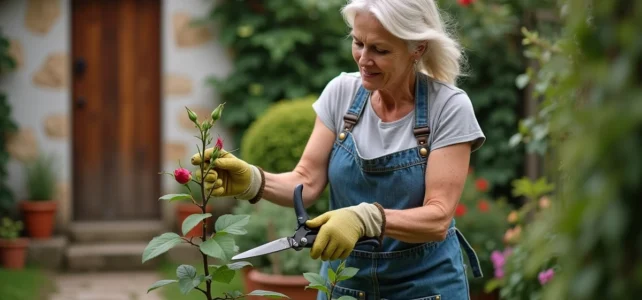
The maintenance of a garden throughout the year relies on a calendar of seasonal tasks, at least in theory. The recurring heatwaves since 2024 require a rethink of this logic: maintaining a rigid month-by-month schedule no longer makes much sense when summer temperatures make certain soil work counterproductive. Adapting interventions to the actual climate, rather than the usual calendar, becomes the foundation of effective garden maintenance.
Shredding pruning waste: the most underestimated maintenance task
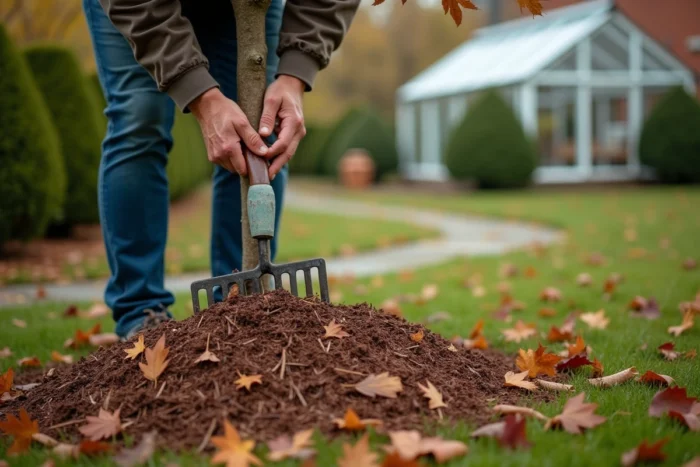
Most gardening guides mention mulching without detailing where the material comes from. Landscape professionals emphasize one specific point: systematically shred branches and pruning debris to reuse it directly as ground cover.
This on-site recycling changes the maintenance logic on several levels. Field reports indicate a reduction of up to 40% in watering needs thanks to the layer of shredded material maintained at the base of plants. The soil stays cool longer, weeds grow less quickly, and trips to the dump decrease significantly.
A garden shredder represents an investment, but it pays for itself in one or two seasons for an average-sized garden. The resources available on infojardinage.com allow for a deeper exploration of the choice of equipment suitable for each type of terrain.
- Shred hedge trimmings, shrub cuttings, and small branches after each seasonal intervention.
- Spread the shredded material in a thick enough layer at the base of flower beds, fruit trees, and in the vegetable garden.
- Renew the layer in spring and autumn, when the volumes of pruning are the highest.
Adapting the gardening calendar to summer heatwaves
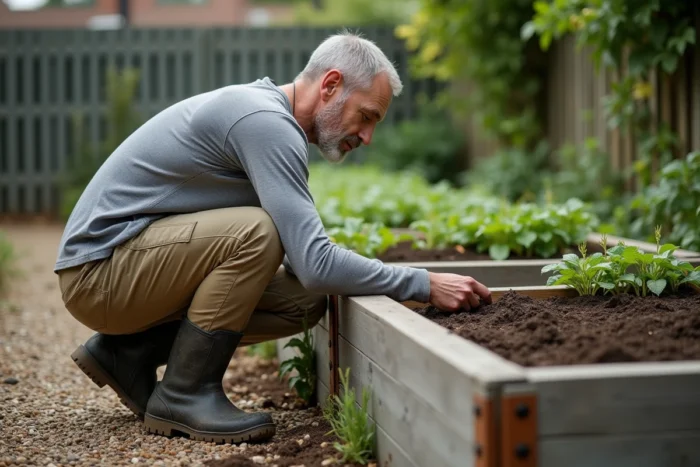
The classic reflex is to plan soil work (digging, planting, mechanical weeding) from March to October. The recurring heatwaves make this approach risky in the height of summer. Turning over dry, overheated soil destroys microbial life and accelerates evaporation.
Experts now recommend postponing soil work to milder periods, limiting activities during extreme heat to three priorities: sensible watering, maintaining existing mulch, and closely observing the condition of the plants.
Sensible watering during heat
Watering early in the morning or late in the evening remains essential. However, the frequency should decrease if the mulch is well in place: a covered soil retains its moisture much longer than bare soil exposed to direct sunlight.
It is better to water deeply and less frequently than to provide light daily watering. Shallow watering encourages roots to stay near the surface, which weakens plants during prolonged dry spells.
Observe rather than intervene
During heat peaks, some plants naturally enter summer dormancy. Yellowing leaves or slowed growth do not always indicate a problem. Pruning or fertilizing at this time can worsen plant stress rather than relieve it.
Sometimes it is better to accept to sacrifice a poorly adapted plant rather than multiply interventions to keep it alive artificially. This logic aligns with a fundamental shift in garden maintenance practices.
Choosing plants suited to the soil rather than constantly correcting the soil
Amending clay soil every year to grow light-soil plants costs time, money, and energy. Field landscapers recommend an opposite approach: select species that thrive in the existing soil.
Well-draining sandy soil is naturally suitable for lavenders, ornamental grasses, and many Mediterranean perennials. Heavy clay soil easily accommodates hydrangeas, hostas, or marsh irises. Working with your soil rather than against it significantly reduces long-term maintenance burdens.
This approach also changes the relationship with watering. A plant suited to its environment requires less water, is more resilient to climate variations, and needs fewer treatments. The garden gains resilience without the gardener spending more time on it.
Lawn maintenance: high mowing changes the game
The lawn remains the most time-consuming maintenance task for many gardeners. The trend observed among landscapers is to raise the cutting height to seven or eight centimeters at a minimum, or even higher.
Taller grass develops deeper roots, is more drought-resistant, and naturally suppresses some weeds. The aesthetic result differs from traditional short grass, but the reduction in mowing and watering compensates significantly.
- Leave the mowing residues in place (mulching) to nourish the soil without additional fertilizer.
- Space out mowing in summer when growth naturally slows with the heat.
- Tolerate a few daisies or clovers, which fix nitrogen and maintain green cover even during dry periods.
Some gardeners are gradually replacing areas of grass with ground covers (thyme, dichondra) that require no mowing. This transition takes place over several seasons, starting with the least frequented areas.
A well-maintained garden throughout the year is not a garden where one constantly intervenes. It is a garden designed to limit unnecessary interventions: plants chosen for the existing soil, mulch from shredded prunings, and watering adapted to real conditions rather than a fixed calendar. The time saved on repetitive chores is reinvested in observation, plant selection, and the actions that truly matter.