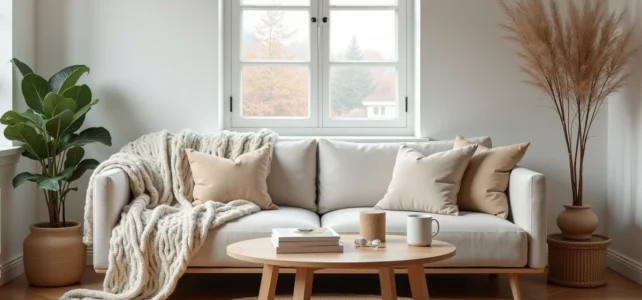
What materials, shades, and arrangements truly create a cocoon-like sensation in an interior? Transforming your home into a trendy refuge is not just about piling cushions on a sofa. The 2026 color palettes, texture choices, and light organization follow precise logics that can be measured by their effects on the ambiance of a room.
2026 Color Palettes and Space Perception: Comparison by Color Family
Interior design experts associate the 2026 palettes with a need for emotional stability at home. According to Venidom, the home is now perceived as a cocoon that regulates emotions, and the color choice becomes the first lever to achieve this.
| Color Family | 2026 Examples | Effect on Ambiance | Suitable Rooms |
|---|---|---|---|
| Natural Greens | Eucalyptus, khaki, forest green | Calm, connection to nature | Living room, bedroom, office |
| Warm Beiges and Neutrals | Sand, hemp | Perceived enlargement, warmth | Small spaces, hallways |
| Muffled Blues | Fog, mineral blue | Serenity, soft freshness | Bedroom, bathroom |
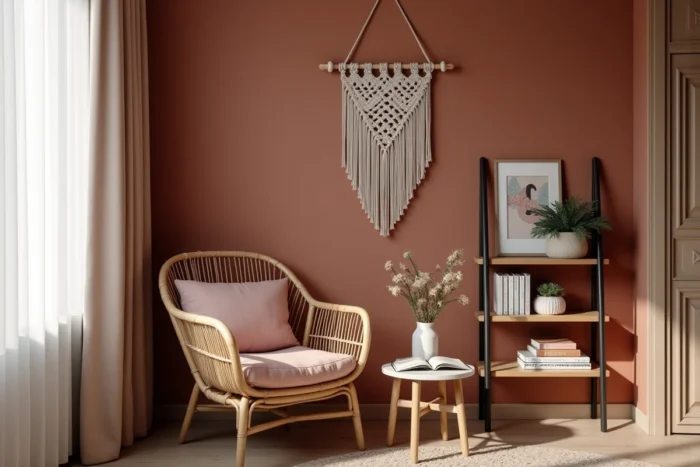
| Desaturated Earth Tones | Soft terracotta, cocoa, caramel | Envelopment, cocooning | Living room, reading nook |
| Earthy Pastels | Clay pink, pale sage green | Softness without coldness | Children’s room, dressing room |
The 2026 trend marks a clear shift away from white walls. According to Maison & Travaux, natural and textured shades are replacing white in small homes to visually enlarge them while warming them up. A wall painted in hemp beige, for example, reflects light differently than pure white: it absorbs less and creates a depth that white flattens.
Resources like maisonmania.fr gather numerous ideas for adapting these palettes to the constraints of each room, from the living room to the bedroom.
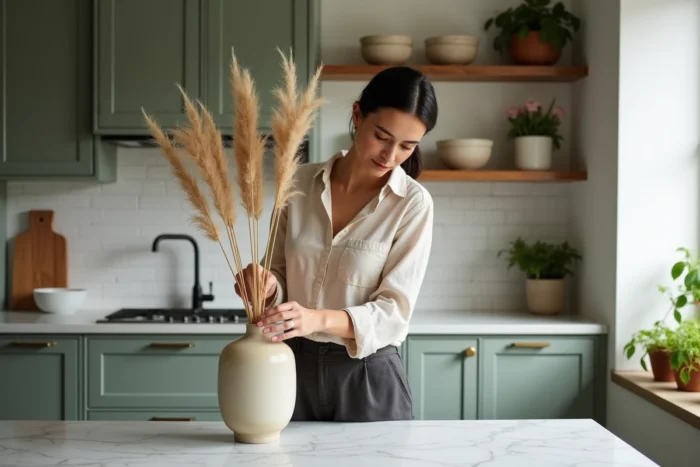
Biophilic Design: The Fastest Growing Decor Trend Since 2024
Biophilic design is not limited to placing a green plant on a shelf. This approach, identified by Secur-Home as the fastest growing trend since 2024 in urban apartments, structures the space around the connection to nature through materials and vegetation.
Specifically, this involves three axes:
- Visible raw materials: unvarnished wood, natural stone, washed linen, boucle wool. These textures provide a visual irregularity that smooth and synthetic surfaces do not replicate.
- Vegetation integrated into the layout: not as decoration added afterwards, but considered from the choice of furniture (open shelves for trailing plants, planter integrated into an entryway piece).
- Maximized natural light: light sheer curtains rather than thick blackout ones, mirrors positioned opposite windows to redistribute brightness in dark areas.
This approach produces measurable effects on daily well-being, according to observations reported by several specialized sources. However, it requires a trade-off: a coherent biophilic interior excludes visible plastic and overly shiny finishes, which strongly directs the budget towards natural materials.
Materials and Textile Layering: What Distinguishes a Cozy Living Room from a Cluttered One
The boundary between a cocooning living room and an overloaded one lies in the hierarchy of textures. Competitor Euclid-France reminds us that visual clutter significantly increases the sensation of mental fatigue. Layering materials works as long as a simple rule is followed: three textures maximum per visual zone.
Textile Protocol for a Cocoon Sofa
Start with a solid fabric sofa (linen, corduroy, thick cotton). Add a wool or twisted knit throw, keeping the color within the same shade family as the seat. Place two cushions, not five: one in the same material as the throw, one in a contrasting texture (faux fur, waffle cotton).
Beyond three layers, the eye can no longer distinguish the materials. The cocooning effect turns into accumulation, and the feeling of refuge gives way to visual overload.
The Floor, Often Overlooked
A short or medium pile rug, made of natural fibers (jute, wool), anchors the living space better than a thin synthetic rug. The slow decor trend, documented by Axodeco, favors durable textile pieces in limited numbers rather than a multitude of cheap accessories.
Lighting and Cocooning Ambiance: Three Levels of Light to Layer
Lighting remains the quickest lever to change the atmosphere of a room. Sources agree on one point: a single ceiling light never creates a cocoon ambiance. Cocooning light relies on layering three distinct levels.
- Ambient light: table lamp or warm white LED string lights (never cool white), placed high or set back to diffuse without glare.
- Functional light: adjustable reading lamp near the bed or chair, desk lamp for the work corner. It illuminates a task without flooding the room.
- Accent light: candles, lanterns, or a small lamp placed on the floor behind a plant. It creates depth and intentional shadow areas.
Dimmable LED lamps allow you to switch from functional mode to relaxation mode without changing bulbs. It’s a modest investment that radically transforms the use of a living room or bedroom in the evening.
Slow Decor Trend: Decorating Less to Decorate Better
Slow decor, identified by Axodeco as a structuring movement for 2025-2026, is based on one principle: every object present in a room must have a function or a story. This logic opposes impulsive decor purchases and collections of unrelated objects.
In practice, this means removing before adding. Emptying a shelf of its knick-knacks to keep only two or three, chosen for their material or shape, produces an effect of immediate visual calm. The 2026 colors (cocoa, forest green, sand beige) support this approach because they work well with few decorative elements.
The trendy cocoon of 2026 is not built through accumulation. It relies on coherent color choices, limited natural materials, and thoughtfully layered light. Each addition must pass a simple filter: does this object make the room more calming or more cluttered?