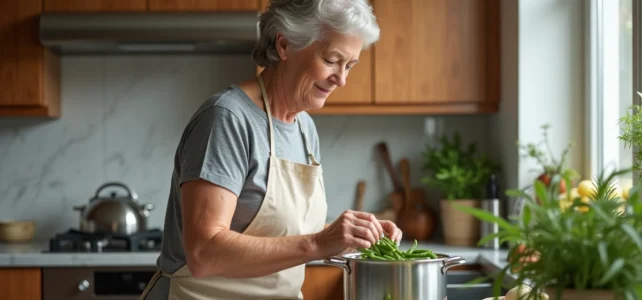
Reheating green beans that have already been cooked in a pressure cooker raises a question of method more than feasibility. Pressure cooking has already altered the cellular structure of the vegetable: restarting a similar cycle produces an unappetizing mush. The choice of reheating technique directly determines the final texture, color, and retention of remaining nutrients.
Reheating time by method: comparison for cooked green beans
The table below gathers the main reheating options suitable for green beans already cooked in a pressure cooker, along with their durations and the expected results on texture.
| Method | Approximate Duration | Texture Achieved | Risk of Overcooking |
|---|---|---|---|
| Pan with fat | 3 to 5 min | Slightly browned, firm | Low |
| Pot on low heat (with a bit of water) | 4 to 6 min | Tender, uniform | Medium |
| Microwave (medium power) | 1 to 2 min | Variable, sometimes uneven | High if too long |
| Oven (180 °C, in a gratin or covered dish) | 10 to 15 min | Melting, gratin if uncovered | Low |
| Gentle steam (basket or daisy steamer) | 3 to 5 min | Close to original, flexible | Low |
The pan and gentle steam offer the best control over a vegetable that has already been softened by pressure. The microwave remains the fastest option, but uneven heat distribution can turn some portions into mush while others remain lukewarm.
For those looking to delve deeper into the subject, an article details how to reheat green beans on Chapeau Melon with specifics on each technique.
Reheating in a pan: why this method preserves the texture of green beans
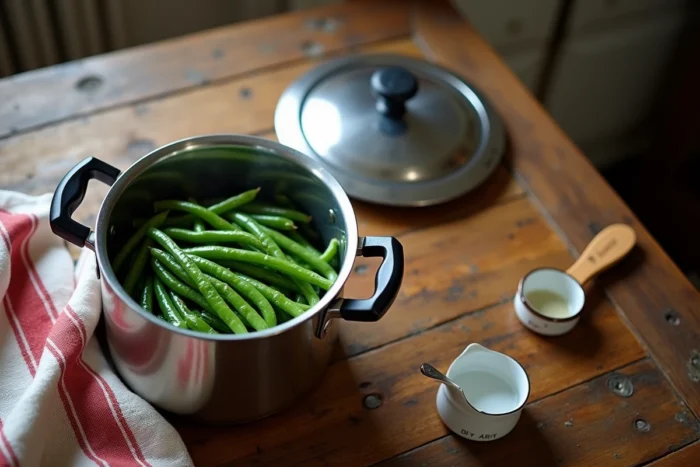
A hot pan with a drizzle of olive oil or a knob of butter acts by direct contact. The dry heat sears the surface of the green bean without reintroducing water, which avoids restarting a moist cooking process on a vegetable that is already saturated with moisture from the pressure cooker.
Reheating in a pan takes 3 to 5 minutes over medium-high heat. The goal is to heat without covering, stirring regularly. Covering the pan traps steam and softens the beans, exactly the opposite effect desired.
Seasoning at the time of reheating
The addition of minced garlic, shallots, or a splash of lemon juice is done in the last seconds, directly in the pan. Green beans cooked in a pressure cooker have often been salted during the initial cooking. Tasting before re-salting avoids an overly salty result.
- Garlic and fresh parsley added off the heat to prevent the garlic from burning
- Some slivered almonds or toasted sesame seeds for added crunch
- A drizzle of soy sauce instead of salt, which adds umami without excess sodium
This approach transforms a simple reheating into a complete side dish, with a more complex flavor than the vegetable taken directly from the refrigerator.
Storage before reheating: the safety window to respect
Reheating does not correct poor storage. Cooked green beans must be cooled quickly and then refrigerated in an airtight container. The microbiological danger zone is between 4 °C and 60 °C, and a dish left at room temperature should not remain there for more than two hours.
The refrigeration storage duration is a maximum of 3 to 4 days. Beyond that, the risk of bacterial proliferation increases, and the texture deteriorates anyway. For batch cooking throughout the week, freezing a portion on the day of cooking remains the most reliable solution.
Reheating frozen cooked green beans
Pre-cooked green beans sold frozen (like Picard products) have already undergone industrial blanching. Their structure is even more fragile than that of fresh home-cooked green beans. However, they lend themselves well to reheating in a pan directly from the frozen state, without prior thawing, allowing for an additional one to two minutes for the melting water to evaporate.
One reheating per portion is the rule. Reheating, cooling, and then reheating again degrades the texture to the point of making the green bean mushy, in addition to multiplying cycles in the temperature risk zone.
Gentle steam or microwave: what is the real difference in the quality of reheated green beans
Gentle steam, obtained with a simple daisy steamer placed over a pot of simmering water, reheats the green bean evenly without drying it out or drowning it. The vegetable retains its green color and flexibility. It is the method closest to an initial steam cooking, suitable for those who prefer a neutral result, without added fat.
The microwave, on the other hand, heats by agitating water molecules. On a delicate vegetable like the green bean, the most exposed areas cook faster than the center of the dish. Covering the container with a pierced film and using medium power limits this imbalance. By heating in 30-second intervals, mixing between each pass, the result improves significantly compared to continuous reheating.
Gentle steam takes a few more minutes, but the result is consistent throughout the dish. The microwave remains relevant for an individual portion in a hurry, provided not to exceed two minutes in total.
Common mistakes that turn reheating into a second cooking
Several common reflexes produce soggy or flavorless green beans during reheating.
- Putting the green beans back into a large volume of boiling water, as for initial cooking: the remaining nutrients migrate into the water and the texture collapses
- Restarting the pressure cooker to reheat: the pressure build-up imposes a temperature that is too high for too long on a vegetable that is already cooked
- Reheating uncovered in the microwave: the surface dries while the inside remains cold
- Adding too much liquid in the pan or pot: a bottom of water one centimeter deep is more than enough in a pot, and no liquid is needed in the pan
Less water and less time summarize the logic of successful reheating. The green bean cooked in the pressure cooker has already absorbed moisture under pressure. Any additional water or prolonged heat works against the desired texture.
The choice of method ultimately depends on the time available and the desired result. The pan adds flavor, steam preserves the neutrality of the vegetable, and the microwave is a quick fix. In any case, the key remains brief reheating, at moderate heat, on green beans properly stored in the cold.