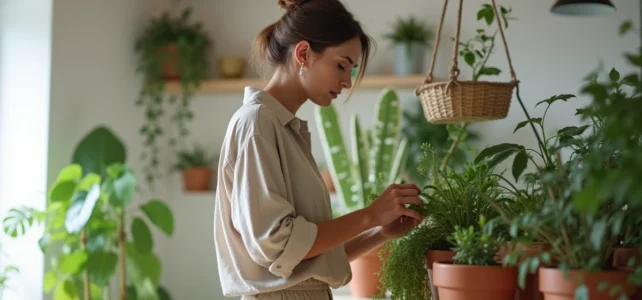
Plants are no longer just for decorating a windowsill. They are becoming part of wellness routines, dietary supplements, and even European regulatory debates. The plant and wellness trends of 2026 reflect a dual movement: greener interiors and a stricter legal framework for plant-based products.
Regulation of wellness plants in Europe: what changes in 2026
Have you ever bought a CBD oil or a plant-based supplement without really knowing what was in the bottle? In 2026, the answer to this question will become clearer, at least from a regulatory standpoint.
In February 2026, the EFSA (European Food Safety Authority) published a recommendation establishing for the first time a provisional safety level for CBD in dietary supplements. The threshold set is 0.0275 mg per kilogram of body weight per day, which is about 2 mg per day for a 70 kg adult. A very low dosage, which effectively excludes most concentrated products previously sold in specialty stores.
In March 2026, a complementary scientific opinion focused on a CO2 extract of industrial hemp as a novel food. Following this, the 4th edition of the Compendium of Botanicals was published. This document lists plant species containing potentially concerning substances. A plant product must now prove its safety through precise toxicological data to remain on the European food market.
In practical terms, this means that plant-based wellness brands must reformulate or document their ranges. The CBD sector, in particular, is entering a sorting phase between compliant products and those outside the framework. To keep up with these developments, articles published by L’Herbe sous le Pied regularly cover news about plants and their uses.
Medical cannabis in France: generalization and its limits
France launched the regulated generalization of medical cannabis in July 2026, after several years of experimentation. This scaling up changes the perception of plants in the health sector.
Medical cannabis does not pertain to wellness in the broad sense. It targets specific pathologies (neuropathic pain, certain forms of epilepsy, chemotherapy side effects). The distinction between regulated therapeutic use and wellness use remains clear in the texts.
This generalization has an indirect effect on the wellness plant market. The strict medical framework of therapeutic cannabis reinforces the boundary between what pertains to health and what pertains to daily comfort. Consumers of hemp teas or CBD products must understand that these products do not benefit from the same level of evidence or regulation as medical prescriptions.
Indoor plants and daily wellness: the trend of reasoned greenery
On the decoration and lifestyle front, the 2026 trend no longer encourages accumulating pots in every corner. Decorators now speak of reasoned greenery: fewer plants, better chosen, better maintained.
Three criteria guide this choice:
- Resistance to temporary drought, because most indoor plants die from overwatering or neglect. Varieties like sansevierias or zamioculcas can tolerate several weeks without water.
- The ability to adapt to low light. In a north-facing apartment, a fiddle leaf fig will suffer. A pothos or philodendron will thrive without direct light.
- Non-toxicity for pets. A often overlooked point: lilies, dieffenbachia, or spathiphyllum are toxic to cats and dogs. Households with pets turn to species like calathea or chlorophytum.
This reasoned approach aligns with the wellness trend through a simple mechanism. Taking care of a plant whose needs you understand provides a different satisfaction than buying yet another decorative pot. The act of maintenance becomes a soothing micro-routine, akin to a daily walk or a stretching session.
Adaptogenic plants and dietary supplements: what science says
Ashwagandha, rhodiola, ginseng: these so-called adaptogenic plants are increasingly occupying shelves of dietary supplements. The promise? To help the body better manage stress.
Before consuming them, clarification is necessary. The term “adaptogen” does not have a regulatory definition in Europe. It comes from Soviet pharmacology in the 1960s and refers to plants believed to increase non-specific stress resistance. Some studies show measurable effects on cortisol or perceived fatigue, but the levels of evidence remain heterogeneous depending on the species.
The Compendium of Botanicals published by the EFSA in 2026 lists several of these plants among those containing substances to monitor. Rhodiola, for example, is receiving particular attention due to its potential interactions with certain medications.
For consumers, caution involves a few reflexes:
- Check that the product clearly states the amount of extract per dose and the exact botanical species used
- Avoid combining multiple adaptogenic plants without medical advice, as interactions are poorly documented
- Prefer manufacturers who publish their purity and contaminant analyses
The sustainable development of the plant-based supplement sector also depends on the traceability of raw materials. An ashwagandha root grown under controlled conditions does not contain the same concentrations of active ingredients as a wild harvest that is not standardized.
The plant and wellness trends of 2026 converge towards a common principle: better understanding what we cultivate, what we consume, and what we apply. The European regulatory framework is tightening, the generalization of medical cannabis in France is redrawing the boundaries between health and comfort, and indoor plant enthusiasts are prioritizing quality over quantity. The green gesture, whether domestic or dietary, is becoming more demanding.