
Sexually transmitted infections spread through direct sexual contact, through blood, or from mother to child. None of them are transmitted by clothing placed on a thrift store rack. The confusion arises from the fact that some skin conditions can theoretically survive on textiles, and it is this shortcut that fuels fear.
Why STI viruses do not survive on textiles
HIV, the hepatitis B virus, and the pale treponeme (responsible for syphilis) have one thing in common: they need a warm, moist biological environment to remain viable. Outside the body, these pathogens lose their ability to infect within minutes to hours depending on the conditions.
A second-hand garment, even worn without prior washing by its previous owner, has been exposed to open air, handled, folded, and transported. HIV is not transmitted through textiles, and almost all pathogens responsible for classic STIs are not either. The same goes for syphilis, gonorrhea, or chlamydia, which require direct mucous membrane contact.
The question of STIs and second-hand clothing regularly comes up on forums, driven by understandable but unfounded microbiological concerns regarding sexually transmitted infections in the strict sense.
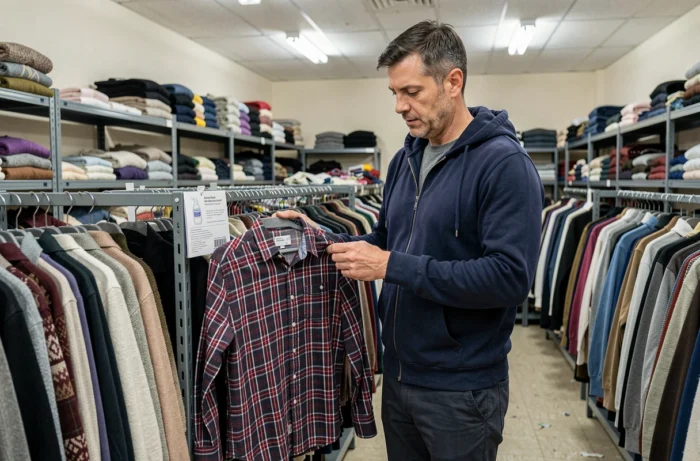
Scabies, fungi, body lice: the real risks of second-hand clothing
While STIs do not pose a problem, other infectious agents deserve attention. The distinction is crucial: these are not sexually transmitted diseases, but skin or parasitic conditions capable of surviving on textile fibers.
The scabies mite
The parasite responsible for scabies, Sarcoptes scabiei, is primarily transmitted through prolonged skin-to-skin contact. Indirect transmission through clothing or bedding is possible but rare. The mite can survive up to three days outside of human skin in the fibers of a fabric, which makes the theoretical risk on a pair of underwear bought the day before.
In practice, this scenario assumes that the garment was recently worn by an infested person and that it has undergone no treatment in the meantime. On a resale platform or in a thrift store, the time between the last wear and the purchase significantly reduces this probability.
Dermatophytes (skin fungi)
Some fungi responsible for mycoses can persist on textiles, particularly in shoes or tight sportswear. Items in intimate contact with the skin are the most at risk: underwear, swimsuits, socks, shoes.
Body lice
Unlike head lice, body lice live in the seams of clothing and not on the scalp. They can be transmitted through sharing or buying infested clothing. This risk remains marginal in the classic second-hand circuit, but is greater for unwashed items sold in bulk.
Washing and thermal treatment: the only reliable prevention
The most effective preventive measure against these realistic risks is not a disinfectant spray or an improvised freezer treatment. Thermal treatment eliminates almost all textile pathogens.
Here are the steps that concretely protect:
- Wash the garment at high temperature (at least 60 °C) before wearing it. This threshold destroys scabies mites, fungi, and the most resistant skin bacteria.
- Put the garment in the dryer on high heat if the fabric allows it. The combination of hot washing and hot drying enhances the effectiveness of the treatment.
- For delicate textiles that cannot withstand heat (silk, delicate wool), isolating them for several days in an airtight bag can eliminate parasites by depriving them of human contact.
- Shoes, which cannot be machine washed, can be treated with an appropriate antifungal spray, then aired out for several days before use.
A simple low-temperature wash program, on the other hand, is not sufficient to eliminate all microorganisms. Warm water and standard detergent kill some bacteria, but not the most resistant agents like fungal spores.
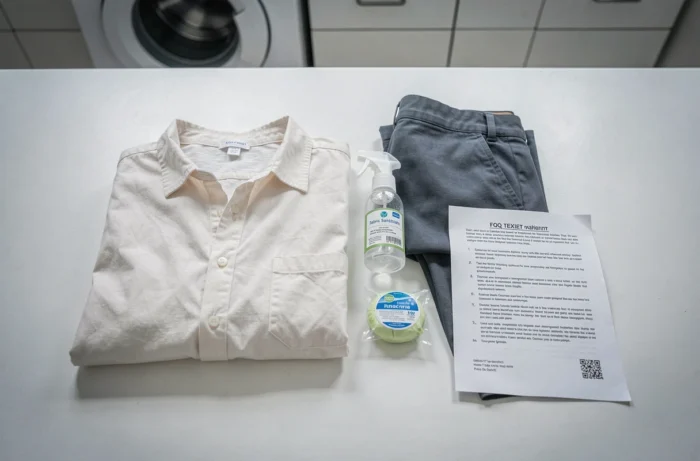
Second-hand underwear: should you avoid them?
The category of clothing that raises the most questions remains that of underwear. Direct contact with mucous membranes and intimate areas explains this concern. Some resale platforms even prohibit the sale of worn underwear or require that they be new with tags.
From an infectious disease perspective, properly washed second-hand underwear at high temperature poses no more risk than trying on new underwear in a fitting room. The problem does not lie in buying second-hand, but in the lack of appropriate washing before the first wear.
The same logic applies to swimsuits or sports leggings. The risk depends on the treatment of the garment after purchase, not on its second-hand status.
Buying second-hand clothing will not expose you to syphilis, HIV, or any STI. The only documented risk concerns parasites and skin fungi, and washing at sufficient temperature neutralizes it. The precaution is summed up in one step: wash before wearing.