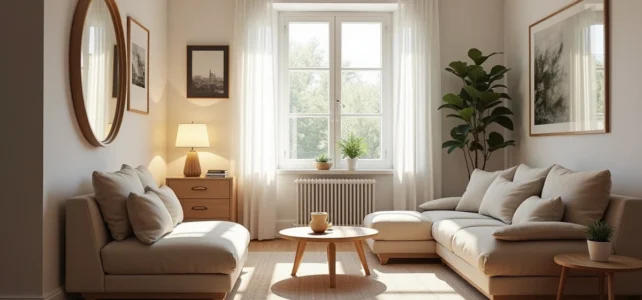
A north-facing room, a ground floor apartment facing another building, a blind bedroom: the lack of light affects a significant portion of French housing, particularly in older collective housing. Solutions exist, but their effectiveness varies depending on the layout of the space, orientation, and available budget. Here are ten concrete tips to brighten a dark room, listed in no particular order, each addressing a different situation.
1. Install an exterior light reflector on the window sill
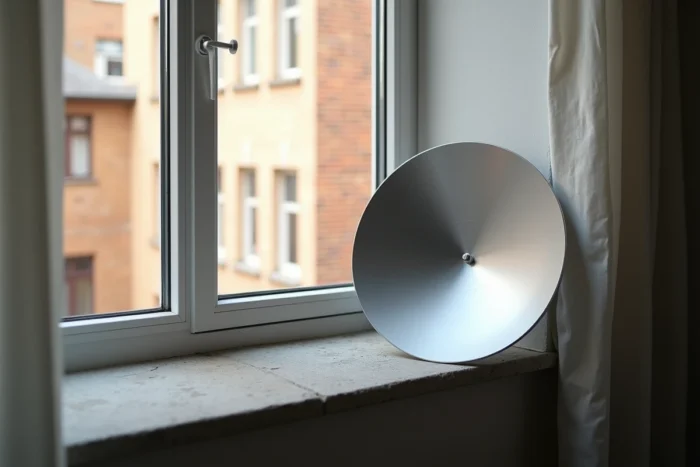
Light reflectors, placed outside on the window ledge, capture low-angle sunlight and redirect it towards the ceiling of the room. According to several interior designers, this device can significantly increase perceived brightness, even in north-facing ground floor rooms.
The principle relies on an angled reflective surface that sends natural light deeper into the space. The cost remains modest compared to structural work, and installation does not require any structural modifications. Field reports vary on the actual gain depending on the width of the street and the height of the buildings across, but the investment-to-result ratio remains favorable in most cases.
To explore additional avenues and learn how to light up a dark room, it is worth considering multiple approaches rather than relying on a single lever.
2. Switch to satin or semi-gloss white on walls and ceiling
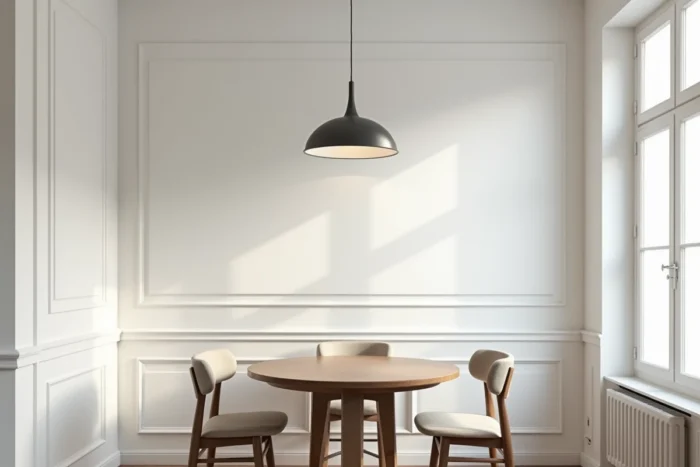
The choice of finish is as important as the color itself. A matte white paint absorbs some light, while a satin or semi-gloss finish reflects more rays back into the room. The ceiling, often overlooked, plays a decisive role: painted in glossy white, it acts as a diffuse mirror.
Pastel shades (powder pink, light blue, soft mauve) offer an alternative to pure white for north-facing rooms, warming the atmosphere without sacrificing clarity. The idea is to treat walls, ceiling, and even woodwork as rebound surfaces for every available ray.
3. Multiply low and mid-level light sources
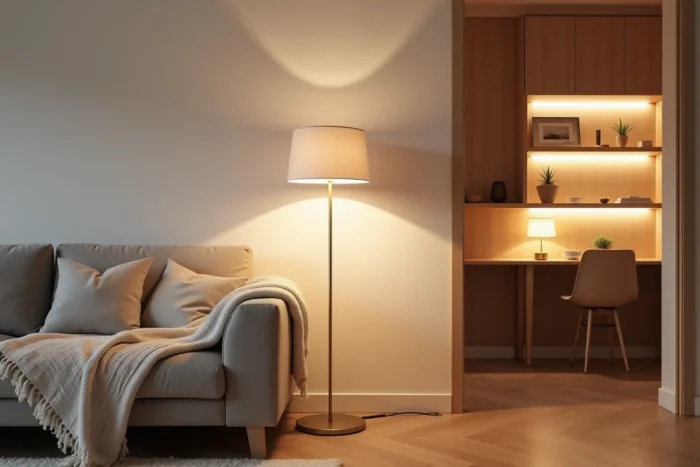
A single ceiling light creates marked shadow zones. To brighten a dark room, it is better to distribute several sources at different heights: table lamps, reading lights, wall sconces, LED strips recessed under shelves.
The goal is to eliminate harsh contrasts between lit areas and dark corners. Three to four well-placed light points provide a sense of uniform brightness far superior to a single powerful central chandelier.
4. Adopt light sensors coupled with an automatic dimmer
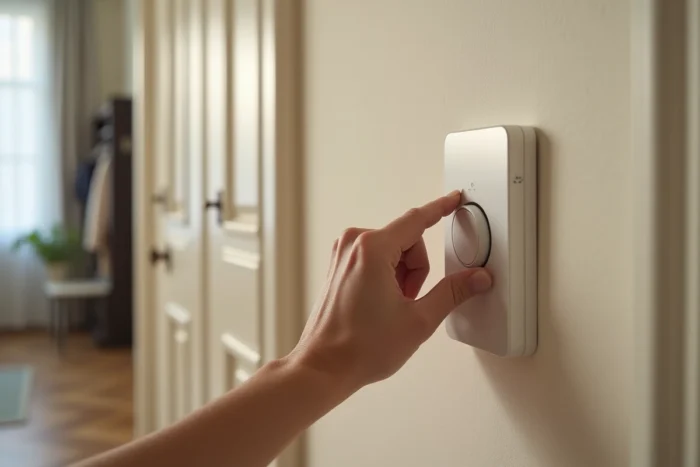
This is a less covered angle in classic decor guides. According to Keradom (2025 guide on smart lighting), the combination of light sensors and automatic dimmers reduces consumption while maintaining constant lighting comfort in poorly exposed rooms, particularly hallways and north-facing spaces.
The principle: a sensor measures ambient light in real-time and adjusts the intensity of the LEDs accordingly. When a cloud passes, the lighting automatically compensates. This dynamic control prevents leaving lights at full power all day.
5. Differentiate color temperature according to the room’s use
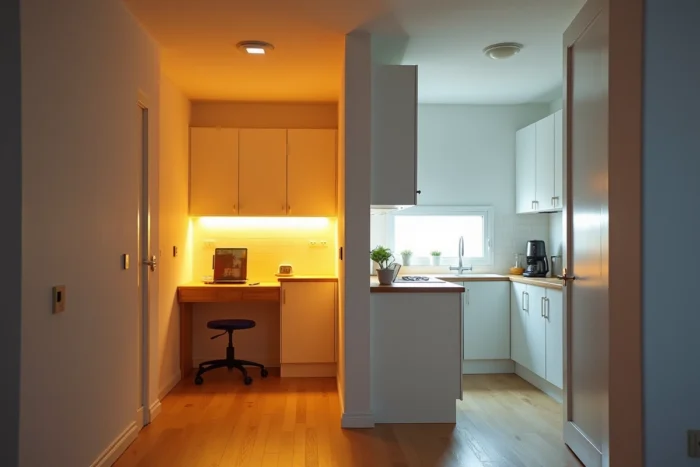
Choosing a single color temperature for all bulbs in a dark room is a common mistake. Recent lighting guides recommend adapting the temperature according to the time of use: warm white (2700-3000 K) in the evening for visual comfort, neutral to cool white (4000-5000 K) during the day to compensate for the lack of natural light.
In a laundry room or a hallway rarely occupied in the evening, cooler lighting enhances the perception of brightness. In a living room, switching to warm light at the end of the day maintains comfort. “Tunable white” LED bulbs allow for this modulation without changing fixtures.
6. Install a light-colored floor and reflective materials
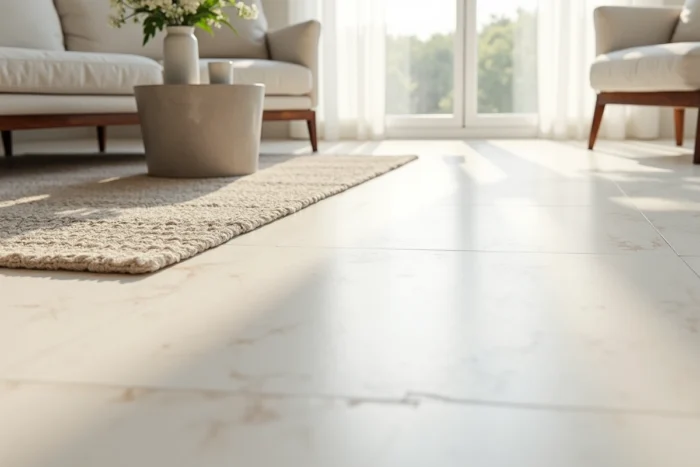
The floor represents the largest horizontal surface in a room. A dark covering (dark wood, anthracite tiles) absorbs light instead of redistributing it. Opting for a light floor with a slightly glossy finish transforms this surface into a passive reflector.
Large-format tiles in cream, bleached wood, or light vinyl are common options. The visual gain is immediate, especially in rooms where the window is high and projects light onto the floor before reaching the walls.
7. Place mirrors opposite or at an angle to windows
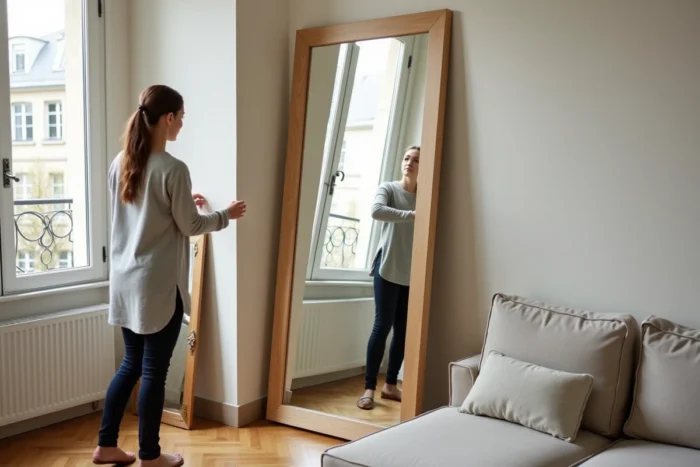
The mirror remains the simplest device to double incoming light. Positioned directly opposite a window, it sends rays deep into the space. Positioned at an angle, it redirects light towards a dark adjacent wall.
A large floor mirror, leaning against the wall, produces a superior effect compared to several small decorative mirrors. The glass surfaces of frames and lacquered furniture enhance this rebound effect, but the large surface mirror remains the most effective lever per unit cost.
8. Declutter and choose low, airy furniture

A massive piece of furniture placed near a window blocks the flow of light. Favoring low, legged furniture with open lines allows rays to pass under and around the furniture. Open shelves are a better replacement for closed bookcases.
Decluttering has an often underestimated effect: removing a thick curtain, replacing an opaque sheer with a translucent fabric, clearing the window ledge of pots and objects can radically change the perception of brightness without spending a dime.
9. Replace a solid door with a glass door or translucent partition
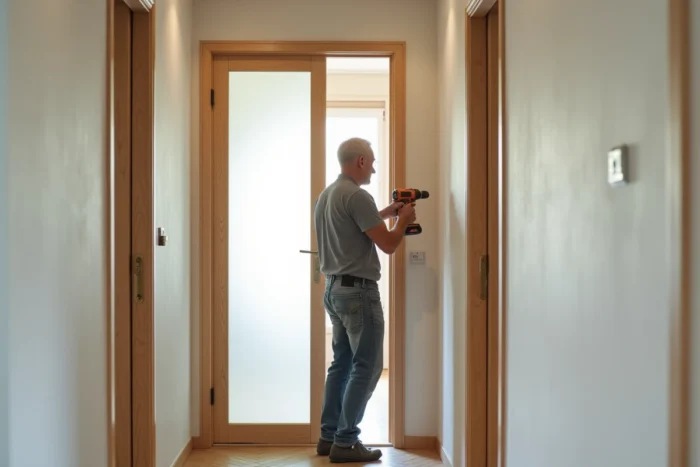
In an apartment where only one room benefits from good sunlight, light remains trapped if solid doors partition the space. A glass door, a glass transom above the door frame, or a frosted glass partition redistributes clarity to blind areas.
This solution involves a small construction project, but the result is structural: light circulates between rooms permanently. Frosted glass preserves privacy while transmitting the majority of rays.
10. Consider a light tube (Sun Tunnel) for windowless rooms
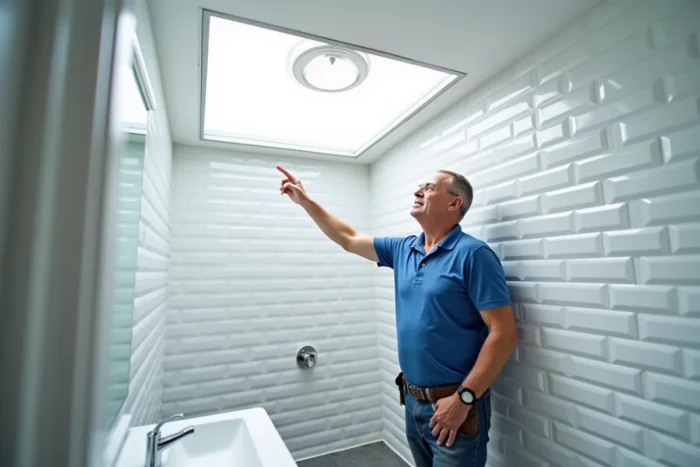
For completely blind rooms (interior bathroom, dressing room, pantry), the natural light tube remains the most radical solution. A reflective tube captures light from the roof and diffuses it into the room via a dome. The result is similar to a skylight without the structural constraints.
Installation requires access to the roof and a reasonable distance between the roof and the room’s ceiling. In attics or single-family homes, this option brings real natural light where no other decorative trick suffices.
Each dark room has its own combination of constraints: orientation, facing buildings, depth, ceiling height. The ten approaches described here can be combined. An exterior reflector combined with a light floor and well-placed mirrors produces a greater effect than any of these solutions taken in isolation. The most effective approach is to start with reversible interventions (mirrors, paint, decluttering) before considering heavier work like the light tube.