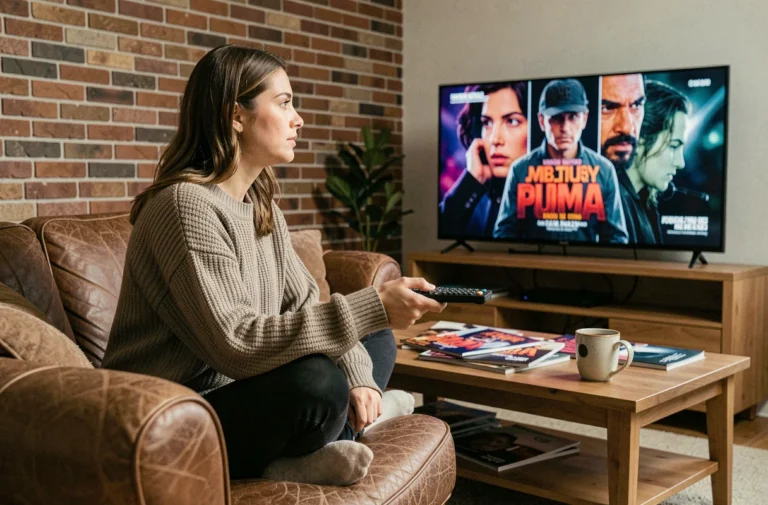
You just finished the last episode of a series that turned your world upside down. End credits, black screen, and that immediate urge to talk to someone about it. The problem is, your friends haven’t seen the series yet, or simply don’t watch it.
Discussing TV series without spoilers, finding people who share the same enthusiasm for a cliffhanger or a fan theory: it’s a real need, and the tools to meet it have multiplied.
Why traditional social media is no longer enough to talk about TV series
Posting a reaction on a general social network exposes you to two risks. The first: spoiling someone who hasn’t watched the episode yet. The second: seeing your comment drowned out by unrelated posts.
Threads on X or Facebook are not structured by season, episode, or narrative arc. As a result, discussions remain superficial. You come across a three-word opinion or a meme, rarely a well-constructed analysis of a plot twist.
Dedicated spaces for series change the game. On platforms like serietvforum.com, discussions are organized by series, by season, sometimes by episode. This compartmentalization protects against spoilers and allows for more in-depth conversations among people who are at the same point in their viewing.
Specialized forums also offer a less visible advantage: the history of discussions remains accessible. When you discover a series months after its airing, you can read the reactions of viewers at the moment of a character reveal or a twist. On a traditional social network, these exchanges have disappeared into the feed.

TikTok and creator recommendations: a new discovery circuit
Have you ever started a series just because a thirty-second video convinced you? This discovery circuit has become massive. TikTok reports that in 2025, users shared an average of 6.5 million posts per day related to movies and series.
A Deloitte study cited by TikTok specifies that 56% of younger generations watch a series after hearing about it from online creators. A recommendation from a creator explaining why a thriller impacted them now carries as much weight as a review in a specialized media outlet.
This phenomenon has a concrete effect on the way we discuss. Video recaps, filmed theories, and live reactions create a common vocabulary. When you arrive on a forum or discussion group, you already share visual references with the other participants.
Micro-dramas: a format that generates its own communities
Micro-dramas (vertical episodes of one to three minutes, often grouped into seasons of several dozen episodes) represent one of the fastest-growing content categories on TikTok. This short format creates very active niche communities.
Discussions around these micro-series differ from those about a classic series. The publication rhythm (sometimes one episode per day) encourages daily exchanges, similar to traditional soap operas. The short format fosters immediate reactions and collective following.
Organizing a spoiler-free discussion: practical methods among friends or online
The spoiler remains the main barrier to sharing about series. A few simple practices can help avoid it without sacrificing rich exchanges.
- Create a dedicated messaging group for each series, with a clear rule: we only talk about episodes that everyone has seen. A pinned message indicates the current episode of the group.
- On forums structured by episode, post in the thread corresponding to the specific episode you are commenting on. Newcomers know exactly how far they can read.
- Use spoiler tags (available on Reddit, Discord, and most forums) to hide sensitive passages. A simple click reveals the content for those who are up to date.
- For in-person discussions, start with the question “Where are you at?” before launching any comments on the plot.
These habits may seem obvious, but they make the difference between a lasting discussion group and one that members leave after too many spoilers.

Enhancing your TV series discussions with tracking and rating tools
Discussing a series implies remembering what you’ve seen, and sometimes comparing your impressions with those of others. Series tracking apps (TV Time, SeriesGuide, JustWatch) allow you to check off watched episodes, rate each episode, and consult the opinions of other users.
Have you ever forgotten if you finished season 2 of a series you started six months ago? A series tracker avoids this confusion and facilitates recommendations. When someone asks you what to watch, you can browse your history and find a title you enjoyed.
Combining personal ratings and collective discussion
Some apps integrate a social aspect. TV Time offers a feed where users share their reactions after each episode. This mix of personal tracking and collective discussion works well for series currently airing, when everyone is moving at the same pace.
For older series, forums remain more suitable. Discussion threads are archived and accessible, unlike social feeds that prioritize novelty. Combining a tracker for monitoring and a forum for analysis covers both needs.
Sharing about TV series is no longer limited to a “have you seen?” thrown at the coffee machine. Between structured episode forums, creators fueling discovery on TikTok, and apps that keep track of your viewings, tools exist to transform every series into a collective experience. The simplest approach is to choose a space that fits your viewing pace and settle in.