
A letter arrives in the mailbox, header “Inser Asaf”, shipping address 121 rue Manin, 75019 Paris. Before responding, providing documents, or going in person, it is necessary to know if this letter is legitimate.
The association has existed since 1984 and manages a domiciliation service for people without stable housing, which generates a significant volume of administrative correspondence. Verifying the authenticity of such a letter does not require technical skills, but a precise method.
Cross-check the SIREN and RNA before any other steps
The first thing to do when receiving a letter from an association is to check its legal identifiers. Inser Asaf is registered under SIREN 440 060 762 and RNA number W751148871. These two numbers are listed in the legal notices on the official website of the association, updated as of August 22, 2024.
You can cross-check this information on annuaire-entreprises.data.gouv.fr, the public database of the State. Just enter the SIREN and verify that the name, address (121 rue Manin, 75019 Paris), and active status match exactly what is stated in the received letter. Any discrepancy, even minor (a different SIRET number, a slightly modified address), should raise a red flag.
To go further, you can also verify a letter from Inser Asaf received at 121 rue Manin by consulting the complete head office SIRET: 440 060 762 00018. This 14-digit number specifically identifies the establishment at 121 rue Manin and confirms that the letter indeed comes from the correct geographical site, not from an old location or a namesake structure.

Inser Asaf letter: concrete elements to examine on the document
A legitimate administrative letter from an approved association for domiciliation contains identifiable markers. We are not talking about vague “trust signs,” but verifiable elements line by line.
- The shipping address must be exactly 121 rue Manin, 75019 Paris, without any variants (“121 bis,” additional PO box, different postal code). Any modification of the address compared to the official databases is suspicious.
- The letter must mention at least one legal identifier (SIREN, RNA, or SIRET). A document that does not include any of these numbers while requesting personal documents or payment does not comply with common administrative practices.
- The name of the association must be spelled “INSER ASAF” or “Inser Asaf.” Approximate variants (“Insert Asaf,” “Inser-ASAF” with a fanciful hyphen) may indicate a fake.
- If the letter contains a web link, it must point to the domain inserasaf.fr or inserasaf.org. A link to a different domain (even visually similar) is an indicator of a phishing attempt, as reminded by the CNIL in its recommendations on detecting malicious messages.
Each element is checked individually. One single criterion is not enough to authenticate the letter; it is the consistency among all these points that allows for a conclusion.
Contact the association directly to clear any doubts
When document verification leaves a doubt, the most reliable approach is direct contact. Inser Asaf has an official website (inserasaf.fr) where contact details are listed. Call or write using only the contact information found on the official site, never those appearing on the suspicious letter.
This precaution may seem excessive, but it prevents a classic scam scenario: a fake letter that includes a phone number or fraudulent email address, redirecting to a complicit interlocutor. Always seek contact details independently, via the website or through the association directory of the 19th arrondissement town hall.
What to ask by phone
When calling, provide the date of the letter, the reference if there is one, and ask for confirmation that this document was indeed issued by the association. A serious organization can confirm or deny the sending of a specific letter, especially if it concerns domiciliation or a summons.
Responses vary on this point: some associations respond quickly, while others operate with limited hours. If you do not receive an immediate response, do not take any further action regarding the letter while waiting for confirmation.
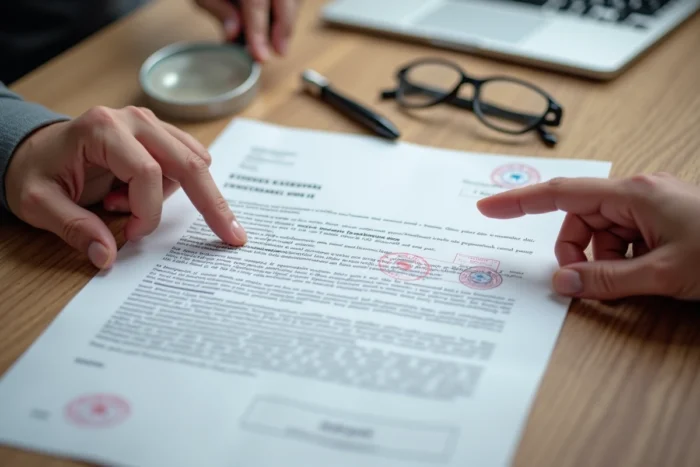
Reporting in case of fraudulent letters impersonating Inser Asaf
If, after verification, the letter turns out to be fake, two reflexes are useful. The first is to report the attempt on the platform cybermalveillance.gouv.fr, which centralizes reports of scams and identity theft of organizations. The second is to notify Inser Asaf directly, so the association can alert its beneficiaries.
A fake letter using the identity of an association fighting against exclusion often targets people in situations of administrative precariousness. Reporting is not a formality: it helps protect a vulnerable audience and allows authorities to identify ongoing fraud campaigns.
What to do if you have already responded to the letter
If personal documents have been transmitted before verification (identity card, proof of address, bank details), file a report with the police or gendarmerie. Monitor your bank accounts and you may request a renewal of your identity document to limit the risk of cascading identity theft.
The verification of a letter from Inser Asaf received from 121 rue Manin relies on three pillars: cross-checking legal identifiers in public databases, methodical examination of the document itself, and direct confirmation with the association via independent contact details. None of these steps take more than a few minutes, and the combination of all three eliminates almost all risks of fraud.